

The manufacturing of steel tubes includes processes such as forging, seamless processing and welding. Almost all types of metallic materials can be used for tube production, from cast iron to super heat-resistant alloy steels. Due to the multi-step manufacturing process, finished tubes must undergo various mechanical property tests to verify reliability. The flattening test is used to evaluate the compressive performance of steel tubes under static loading, so as to determine their strength and pressure resistance.
The flattening test is a testing method that uses equipment to compress a steel tube to a specified size and effectively detect defects. In the test, the specimen is placed between two parallel plates, and a press or other suitable equipment is used to apply pressure. The specimen is then inspected for bending, deformation, cracks or weld cracking. If none of these defects appear, the specimen is considered qualified.
1. Reference Standard
GB/T 246—2017 / ISO 8492:2013
2. Principle of the Test
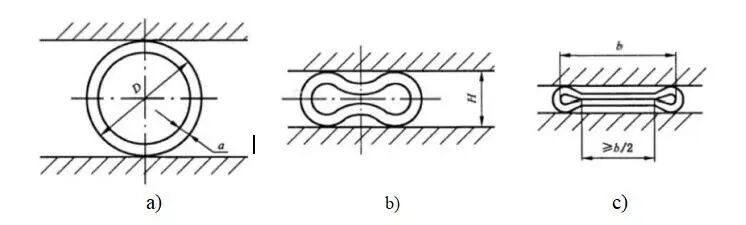
A test specimen of specified length, cut from the metal tube perpendicular to its longitudinal axis, or an end specimen of the tube, is subjected to a flattening force (see Figures 1a and 1b) until the distance between the two parallel plates reaches the value specified in the relevant product standard.
In the case of closed flattening, the width of the contact area on the inner surface of the specimen shall be at least half of the inner width b of the specimen after normal flattening.
Notes on Testing
Various test methods are available in practice. For welded tubes, the properties of the weld zone shall also be examined. These are important points to note during testing, and the correct test method shall be selected accordingly
Post time: Feb-21-2026


